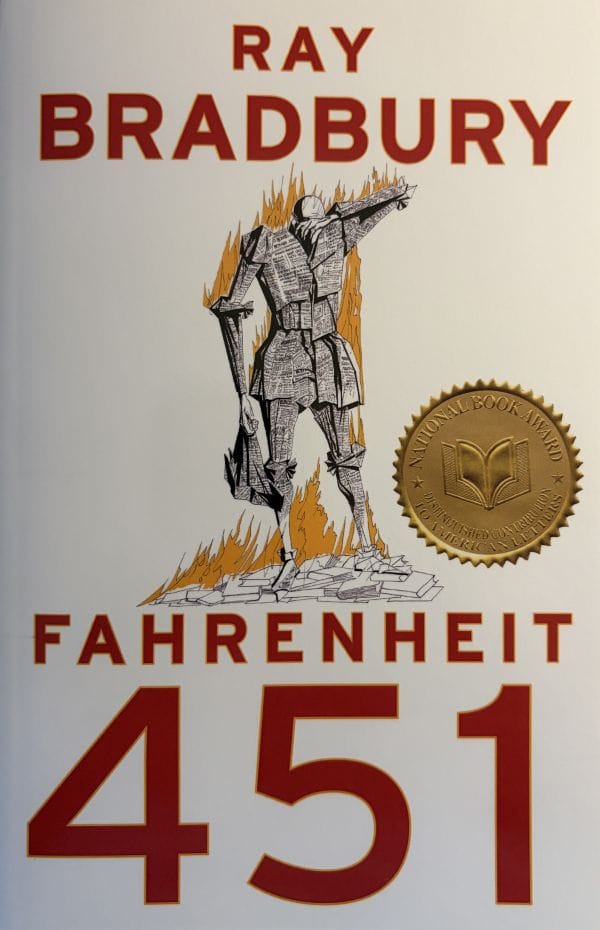

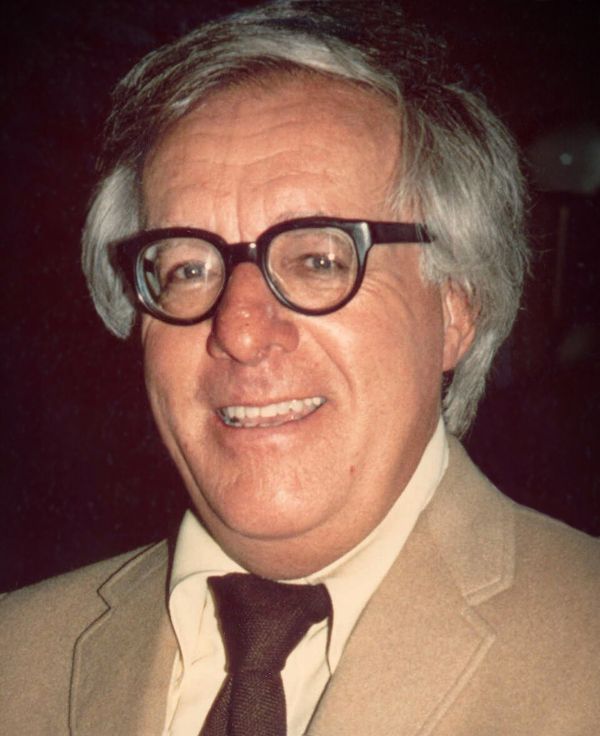
Despite having been published almost 75 years ago, Ray Bradbury’s Fahrenheit 451 bears an uncomfortable resemblance—albeit extreme—to the approach taken by many Americans today towards history, education, and intellectual freedom. It’s a bit unsettling, but as a bonus, it’s a genuinely enthralling sci-fi thriller.
High Point: Bradbury’s narrative flows easily, and never detracts from a complex message.
Low Point: None
Author: Ray Bradbury
Publication Date: 1953
Genre: Science Fiction
Banned Book (Tennessee and Texas)
According to PEN America, access to Fahrenheit 451 has been restricted by two school districts in the United States.
Monroe County Schools are based in Madisonville, Tennessee—a city of just over 5,000 located roughly midway between Knoxville and Chattanooga in the hills of eastern Tennessee. The state’s open records statute requires public entities to respond only to Tennessee residents. Therefore, information is not available to us regarding the extent of the restrictions—implemented in 2025—or their justification.
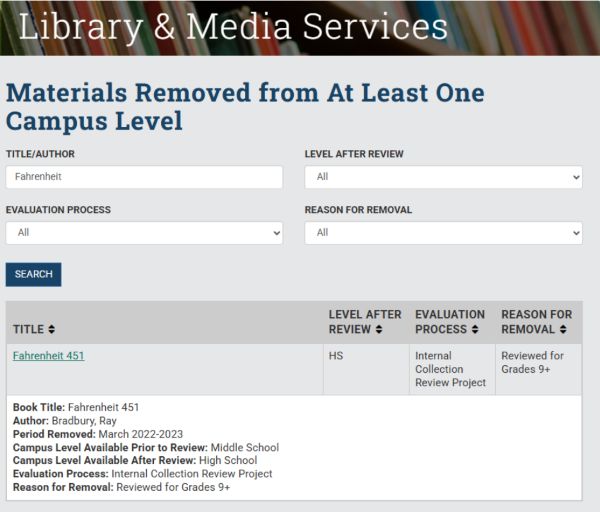
The Frisco Independent School District is based in Frisco, Texas, a suburb of about 250,000 on the north side of the Dallas-Fort Worth metropolitan area. Apparently, Frisco ISD forbids its middle school libraries to provide access to Fahrenheit 451, but high school libraries may include it in their inventories. An Open Records Request for documents providing justification for removing access produced the record below. Although the entry for “Reason for Removal” does not provide an indication of the book’s objectionable material, it is the extent of the district’s obligation to provide information.

Listen to the audio version of this review
space
A Banned Book About Banned Books
Despite having been published almost 75 years ago, Ray Bradbury’s Fahrenheit 451 bears an uncomfortable resemblance—albeit extreme—to the approach taken by many Americans today towards history, education, and intellectual freedom. It’s a bit unsettling, but as a bonus, it’s a genuinely enthralling sci-fi thriller.
The novel focuses on Guy Montag, a fireman in the future where fire departments start fires instead of fighting them. Burning books is their primary function as the government works to spare its citizens from free and diverse thought. And Montag has begun to question that fundamental drive to uniformity.
A successful author and screenwriter for more than 50 years, Bradbury’s narrative flows easily and never detracts from the message. The reader is often inside Montag’s head—and his thoughts are sometimes disjointed and panicky. But Bradbury manages to maintain a shaky but coherent thread that enables us to trace Montag’s evolution to a new paradigm.
Interestingly, some of Bradbury’s cultural paradigms did not shift. Although the story occurs far into the future—with its advanced technologies and institutional fascism—many of the 1950s social norms remain intact. For example, everyone still smokes, and of course, a woman’s place is still at home.
Also, Bradbury made an amusing choice of names for his protagonist, Montag, and Montag’s first cohort, Faber. In the 1950s, Montag was a well-known manufacturer of paper and stationery while Faber-Castell made high-end pens and pencils.
Bradbury wrote this novel in 1953 as McCarthyism was thriving with its attempts at censorship and the persecution of those who disagreed with certain government policies—much as we’re seeing in the United States today. School districts nationwide are restricting or forbidding access to books—including this one—many of which stress diversity instead of uniformity. Some state legislatures and local law enforcement agencies are pursuing educators and librarians for discussing topics in the classroom or stocking books that don’t agree with their philosophies.
Bradbury took these circumstances of his time and exploded them into the radical conditions of Fahrenheit 451—perhaps a parable for his time and ours. As it was in the book—and as it became in the 1950s—there seems to be a growing number who are unwilling to accept government authority’s definition of normal and its drive to uniformity.
Quotes
| With school turning out more runners, jumpers, racers, tinkerers, grabbers, snatchers, fliers, and swimmers instead of examiners, critics, knowers, and imaginative creators, the word “intellectual,” of course, became the swear word it deserved to be. You always dread the unfamiliar. |
| Everyone must leave something behind when he dies… A child or a book or a painting or a house or a wall built or a pair of shoes made. Or a garden planted. Something your hand touched some way so your soul has somewhere to go when you die, and when people look at that tree or that flower you planted, you’re there. It doesn’t matter what you do… so long as you change something from the way it was before you touched it into something that’s like you after you take your hands away. |
Movie/TV Adaptation
Fahrenheit 451 (1966); Fahrenheit 451 (2018)

Sources For This Book
This book was purchased at Sweetcrows: A Confectionary Bookstore in Coleman, Texas
Free eBook (Project Gutenberg): Not available
Free Audiobook (LibriVox): Not available
Available to Purchase: Alibris, Biblio, Thriftbooks
Similar Books You May Enjoy…
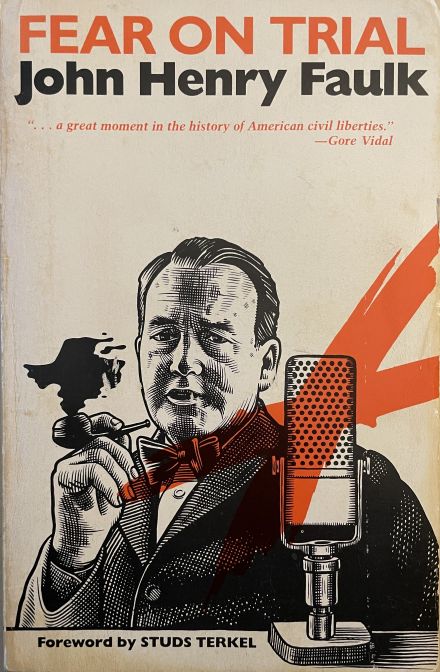
Fear on Trial (1963)
John Henry Faulk

Night of Delusions (1972)
Keith Laumer

Unwise Child (1962)
Randall Garrett

The Haunting of Hill House (1959)
Shirley Jackson