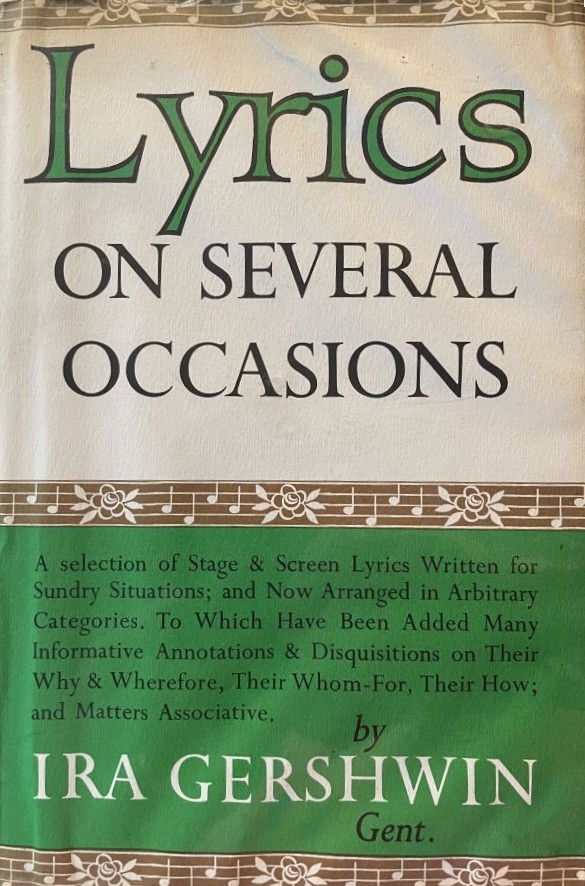

If you care about the classic movie musicals from the 1930s and 40s, you’ll want to read Lyrics on Several Occasions.
High Point: Gershwin’s backgrounds for his lyrics include technical notes, anecdotes and even gossip.
Low Point: None
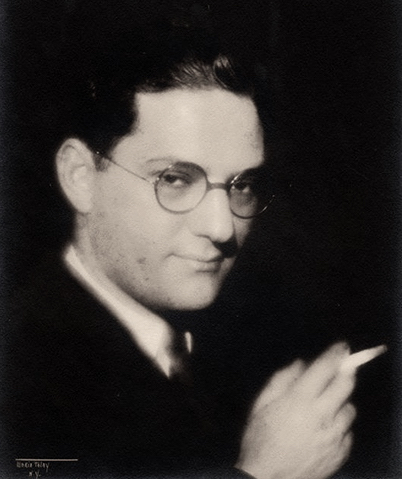
Author: Ira Gershwin
Publication Date: 1959
Genre: Arts
Listen to the audio version of this review
space
If you care about the classic movie musicals from the 1930s and 40s, you have to read Lyrics on Several Occasions by Ira Gershwin.
Gershwin offers commentary for more than 80 musical numbers for which he developed lyrics. For many, he teamed up with his brother George, but he also discusses collaborations with many other well-known composers of the era.
His comments may include technical notes about why he used certain words or rhymes for a specific number. Or they may include anecdotal information about a song. In some cases, he provides his opinions on how specific entertainers performed his work.
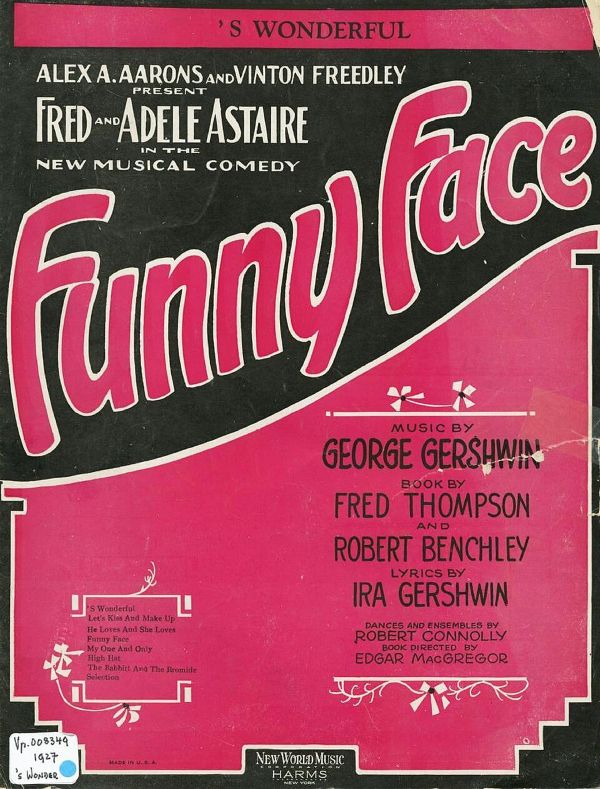
‘S Wonderful
For example, Ira collaborated with George on the song “’S Wonderful” from the musical “Funny Face” in 1927. He explained that he intentionally wanted the sound effect of slurring the “s” from “it’s” with the next word. That is, he wanted it pronounced as “swonderful” and “smarvelous” without the preceding “it” pronoun. And then he expresses frustration with performers who insist on changing the phrase to “it’s wonderful” and “it’s marvelous.” Gershwin must have loved the rendition from 1951’s An American in Paris.
Gershwin also recalls an encounter with a top critic who approached him in the lobby of the Schubert Theatre in Philadelphia. He says the critic felt the song contained an obscene phrase. Telling the story more than 30 years later, Gershwin comments, “I don’t know what he would think about these Freedom-of-Four-Letter-Speech days, but at that time he felt that ‘feeling amorous’ was something better scrawled in chalk than sung from a stage.”
Read Feinstein First
If you decide to read Lyrics On Several Occasions, consider starting first with Michael Feinstein’s The Gershwins and Me. Feinstein spent considerable time with Ira Gershwin, becoming good friends during Gershwin’s later years. His stories from that book provide significant background to Gershwin’s commentary.
All in all, Gershwin’s Lyrics on Several Occasions provides a deeper appreciation of those wonderful old numbers.
‘S marvelous!
Quotes
| [Regarding “’S Wonderful”]: The principal reason for writing this lyric was to feature the sibilant sound effect by deleting the “it” of “it’s” and slurring the leftover “s” with the first syllable of the following word. So I’m frequently baffled by what some singers have in mind and throat when they formalize the phrases to “It’s Wonderful,” “It’s marvelous,” “It’s Paradise,” &c. |
| [Regarding “Let’s Call The Whole Thing Off”] May I conclude with a note of phonic and marital tolerance on the part of Mr. and Mrs. Ira Gershwin? We have been married over thirty years, and the pronunciations taught us in our youth still persist: my wife still “eyethers” and “tomahtoes” me, while I “ether” and “tomato” her. |
Sources For This Book
Free eBook (Project Gutenberg): Not available
Free Audiobook (LibriVox): Not available
Available to Purchase: Alibris, Biblio, Thriftbooks
Similar Books You May Enjoy…
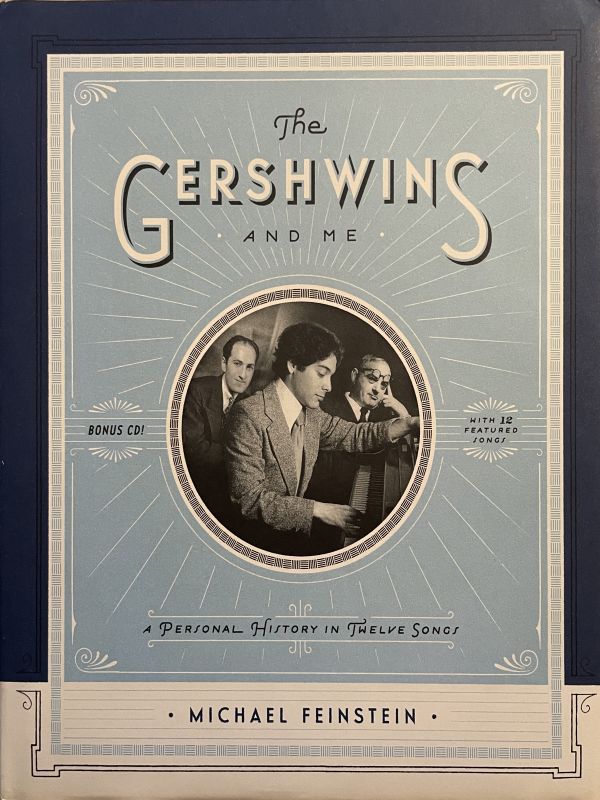
The Gershwins and Me (2012)
Michael Feinstein
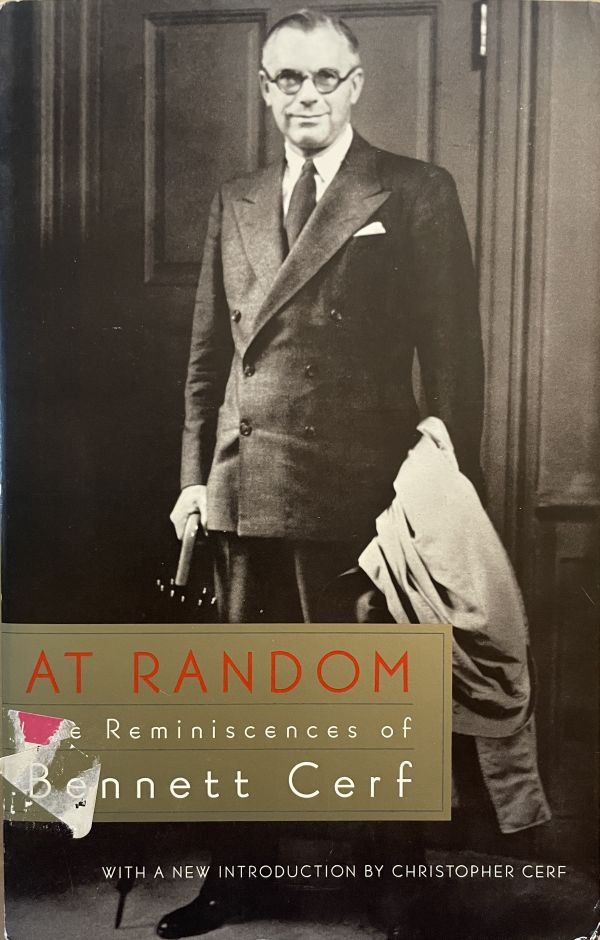
At Random: The Reminiscences of Bennett Cerf (1977)
Bennett Cerf
Anecdotes of Music and Musicians (1948)
Helen L. Kaufmann
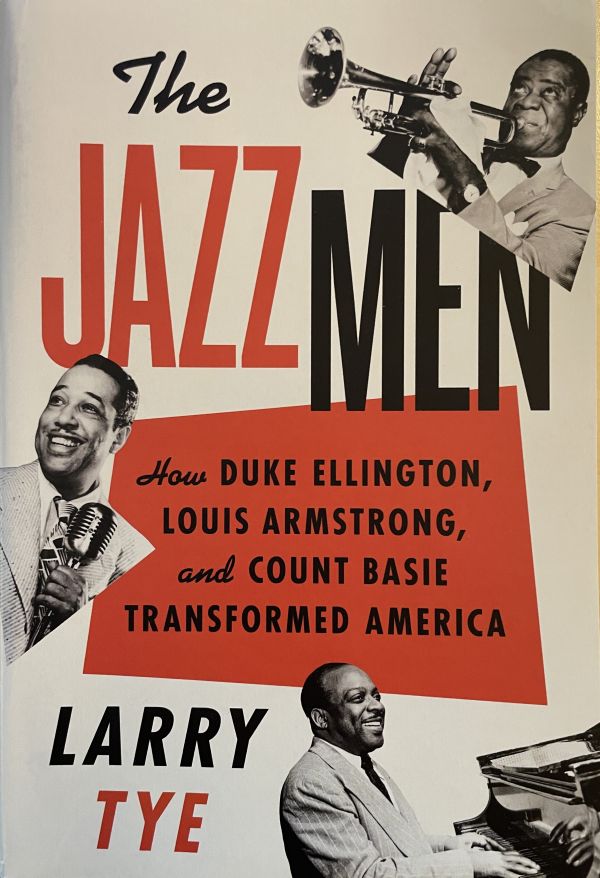
The Jazz Men (2024)
Larry Tye